by admin | Nov 6, 2025 | CWLB, Video Backend, WebRTC
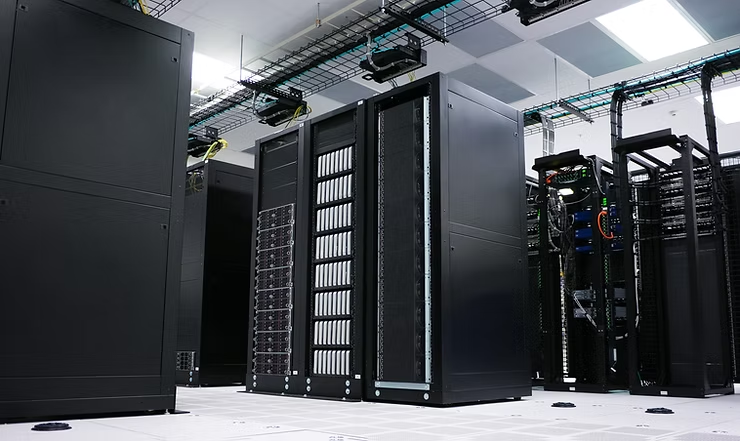
In today’s fast-paced world, effective communication is the lifeblood of any successful enterprise. As businesses continue to expand globally, the demand for a reliable, scalable, and secure communication system becomes paramount. This is where CWLB, our cutting-edge Media Stack steps in as the ultimate solution for enterprise usage. In this article, we will explore the myriad benefits of our Media Stack and how, as a dedicated solution provider, we can help enterprises build an Enterprise-grade communication system to meet their specific needs.
1. Unmatched Performance and Scalability:
Our Media Stack boasts exceptional performance, enabling real-time audio and video streaming without latency issues. With built-in load balancing and clustering capabilities, it can effortlessly scale to accommodate growing enterprise requirements, ensuring seamless communication across geographically dispersed teams.
2. Reliable and Secure Communication:
Security is of utmost importance for enterprises, especially when handling sensitive data. Our Media Stack is equipped with state-of-the-art encryption protocols, securing all communication channels and safeguarding against potential threats, ensuring confidential information remains private and protected.
3. Customization to Suit Enterprise Needs:
One of the key strengths of our Media Stack lies in its versatility. As a solution provider, we understand that each enterprise has unique requirements. With our expertise, we can tailor the Media Stack to meet specific needs, integrating it seamlessly with existing infrastructure and applications.
4. Seamless Integration with Communication Tools:
Our Media Stack is designed to effortlessly integrate with a wide array of communication tools, including Voice over Internet Protocol (VoIP), WebRTC, instant messaging, and more. This compatibility ensures that enterprises can leverage their existing tools while enjoying enhanced communication capabilities.
5. Enhanced Collaboration and Productivity:
Effective communication fosters collaboration, thereby boosting overall productivity. Our Media Stack facilitates crystal-clear audio and high-definition video conferencing, breaking down communication barriers and allowing teams to collaborate seamlessly.
6. Real-time Analytics and Monitoring:
Monitoring communication performance is crucial for enterprises to make informed decisions. Our Media Stack provides real-time analytics, enabling businesses to assess call quality, user engagement, and system health, ensuring optimal performance at all times.
7. Reduced Costs and Enhanced ROI:
By choosing our Media Stack, enterprises can benefit from cost savings due to its efficient resource utilization and scalability. Moreover, the enhanced communication system increases efficiency, delivering a higher return on investment (ROI).
8. Reliable Support and Maintenance:
As a solution provider, we take pride in our unwavering commitment to customer satisfaction. Our team of experts is always available to provide reliable support and timely maintenance, ensuring that our Media Stack operates at peak performance throughout its lifecycle.
9. Future-proof Solution:
With technology evolving rapidly, it is essential for enterprises to invest in future-proof solutions. Our Media Stack is built on cutting-edge technology, ensuring it remains relevant and adaptable to emerging trends and industry changes.
10. Seizing the Opportunity:
By partnering with us, enterprises can harness the power of our Media Stack to build a robust, secure, and scalable communication system. Our expert team will work closely with clients to design, implement, and maintain the ideal solution, tailored to their specific needs.
11. Enterprise Mediasoup:
As Mediasoup is a highly popular open-source Media server with an active community around it, we built CWLB on top of it which makes CWLB solid as a rock and future-proof. CWLB as a Media Stack converts open-source mediasoup to Enterprise Mediasoup to provide unmatched performance with scalability, reliability, and security.
In conclusion, our Media Stack CWLB is the ultimate choice for enterprises seeking to elevate their communication system to new heights. With unmatched performance, security, scalability, and customization options, it empowers businesses to communicate seamlessly and collaborate effectively. As a solution provider, we are committed to helping enterprises harness this power to build an Enterprise-grade communication system that drives success and growth. By embracing CWLB, our Media Stack, businesses can forge ahead confidently into the future of communication technology.
Feel free to meet one of us for an instant meeting or a scheduled meeting using Meetnow. We are reachable at hello@centedge.io and we would be delighted to hear from you.

by admin | Nov 6, 2025 | CPAAS, CPAAS Vendors, WebRTC
Video Communication & Modern Businesses
In an era defined by rapid technological advancement and shifting business landscapes, video communication has emerged as a pivotal tool for modern enterprises. Platforms like Twilio, Zoom, Google Meet, and Jitsi have revolutionized the way businesses operate, enabling seamless collaboration and communication regardless of physical distance. The COVID-19 pandemic underscored the critical importance of these tools, as companies around the world were forced to quickly adapt to remote work environments.
During the height of the pandemic, these video communication platforms played a crucial role in maintaining business continuity. Zoom, for instance, saw a massive surge in users as companies turned to its platform for virtual meetings, webinars, and conferences. Similarly, Twilio’s cloud communication solutions enabled businesses to quickly implement and scale their communication strategies, ensuring that employees remained connected and productive. Google Meet and Jitsi provided secure and reliable video conferencing capabilities, allowing teams to collaborate effectively in a virtual setting. These platforms not only kept businesses running but also paved the way for a new era of remote work and digital collaboration.
The current Video communication providers can be categorized into 2 broad categories. One category has those who provide ready-to-use video meeting solutions like Gmeet & Zoom, and another category has those who provide all the tools and technologies like Twilio & Jitsi for building custom video meeting solutions. The second category who provide tools to build video solutions can further be categorized into 2 sub categories. One subcategory is Jitsi which provides ready to use self-hosted video meeting solutions including the frontend, backend, media server, horizontal scaling, etc and the other subcategory is the CPAAS/ Video SDK providers like Twilio which provides a scalable backend service along with frontend APIs to build video applications.
All the above-mentioned categories and subcategories have their strengths and weaknesses for a specific business use case. But in general, a requirement can be divided into the abovementioned categories / sub-categories. Accordingly, an option can be chosen from all the available options in that category/sub-category. To keep this post clear and crisp, we are going to discuss more on the second subcategory of the second category, i.e. Twilio as a Video SDK provider and the impact of its EOL (End Of Life) on its existing customers as well as the sub-category/category as a whole.
Twilio Video Discontinuation & Changing Landscapes
The recent announcement by Twilio regarding the discontinuation of its Twilio Video service marks a significant shift in the landscape of video communication platforms. This decision comes amidst a rapidly evolving market, with new players entering the field and existing ones constantly innovating to meet the growing demands of users. While this change may initially cause concern for businesses relying on Twilio Video, it also presents an opportunity to reassess and adapt to the evolving needs of modern communication.
As businesses navigate this transition, it’s important to recognize that the discontinuation of Twilio Video does not signify the end of innovative video communication solutions. Instead, it signals a dynamic market where companies must remain agile and open to exploring new technologies. This shift also underscores the importance of choosing a video communication platform that aligns with the long-term goals and requirements of the organization. By carefully evaluating the available options and selecting a platform that offers both stability and scalability, businesses can continue to leverage the power of video communication to drive growth and success in an ever-changing landscape.
Possible reasons that could have led to Twilio Video Sunset
People who understand how Video technologies work and how complex it is to build a stable enterprise-ready video application, can’t ignore the importance of correct decisions early on related to the core components of the video application. If one goes wrong here at the early stages, there is a good chance of negative impacts in the later stages related to stability, scaling, future feature enhancements, etc. I assume something like this, i.e. some incorrect decisions in the early stages of the Twilio video, would have happened with them as well. I wish to share a short story from my own experience before moving on.
We who followed WebRTC from its early days i.e. from 2012-13 time, can’t forget the promise made by an open-source WebRTC media server named Kurento to the developer community at that time. It was the leading media server at those times with a promise of media forwarding(SFU), merging(MCU), and real-time post processing(with OpenCV) all combined into one package. It was theoretically the perfect media server that could change the world of media scaling and real-time processing forever. I had used Kurento for some of my personal/commercial projects in 2014-15 and I was also super excited about its prospects and possibilities. It was developed by some students and professors at a Spanish University and this open-source package was maintained by them as well along with other contributors.
But in the year 2016-17, after using this media server for 1 -2 years in some commercial projects, I realized that it is hard to manage and scale this media server. It is resource-guzzling as well as slow and less capable of handling concurrent meeting rooms
in larger numbers. It had some core features like ICERestarts were missing as well which are a necessity if wish to deal with bad networks. Therefore, a realization came to us in the year 2019 that we need to move our commercial project to a better media server if we wish to scale it to larger numbers.
The interesting part here is that Twilio bought Kurento for its promises in the year 2017 and built Twilio video on top of it. They bought it for $ 40 million (I read it somewhere back in 2017!) and spent a good amount of money afterward to make it Twilio Video. I think they realized something similar in 2023 which we realized in 2019 and thought of moving on.
I am not sure if this was the primary reason or not as I can only assume what could have happened. But I think the decision to buy Kurento 2017 and deciding to build a Twilio video on top of it may have some role to play in the decision to Twilio video Sunset.
Key learning from this incident
Anybody planning to build a video application should take a learning from it. The key learning is to avoid doing the fundamentally wrong things early on which may have catastrophic impacts later. Therefore it is critical to have good video application professionals (like us!) on your side who have sufficient experience with your kind of use cases early on, to make the right decisions that is beneficial for you and your application both in the shortest as well as in the longest term.
The Beginning of Search for a Twilio Video Alternative
In the realm of real-time communication, Twilio Video has established itself as a go-to solution for many businesses. However, as it is sun-setting its service for some reasons, we need to consider various factors when exploring alternatives. The importance of reliability, scalability, security, and ease of integration cannot be overstated in this context.
Reliability is paramount in any communication system. Look for alternatives with a proven track record of uptime and minimal disruptions. The best way to check reliability is by building a POC to check the performance of the provider with some edge cases like how the audio/video connection performs when the network degrades OR does the video freezes for a user when switching between 5g / Wifi. These scenarios tell about the depth of the provider concerning building video applications.
Scalability is not a deal breaker if your use case doesn’t require 1000s of users in 1 room or 1000s of rooms concurrently running with 10s / 100s of users in each room. But if you have a use case that needs either 1000s of users in 1 room or 1000s of concurrent rooms, then do check the scalability aspects well. A good practice is to as for load test reports which was done by the provider. The best option is to run the load tests yourselves with a POC application to check the scalability for yourself.
Security is non-negotiable, especially when dealing with sensitive information. Look for alternatives that offer end-to-end encryption and comply with relevant regulations like GDPR and HIPAA. Are they providing E2E encryption in case it is a need for your application Or can they store the recordings in an encrypted format in case of a need? These are some of the questions that need to be asked to the provider before deciding on the security aspects of it.
Ease of integration is another important aspect that can make or break your video application. If it takes too many API calls to achieve a small thing or there are important APIs that are not available for your use case then it is not worth considering the solution even if it offers the above 3.
Based on the above parameters, we can consider 2 types of solutions that can become a Twilio video alternative. One is an open-source media server-based solution and another is a proprietary solution provided by a commercial vendor. In this post, we are going to explore both alternatives in a detailed manner.
Open Source Twilio Video Alternatives:
Open-source video communication solutions are software platforms that enable users to communicate through video conferencing, messaging, and collaboration tools. Unlike proprietary solutions, open-source solutions provide the underlying code for free, allowing users to modify, customize, and distribute the software according to their needs. This openness fosters innovation, as developers worldwide can contribute to improving the software, leading to rapid advancements and feature enhancements.
One of the key benefits of open-source video communication solutions is their flexibility and scalability. Organizations can tailor the software to meet their specific requirements, integrating it into their existing infrastructure seamlessly. Additionally, open-source solutions are often more cost-effective than proprietary alternatives, as they eliminate licensing fees and allow users to leverage a global community of developers for support and development.
In recent years, open-source video communication solutions have gained popularity due to their reliability, security, and privacy features. These solutions prioritize user data protection, offering end-to-end encryption and other security measures to safeguard sensitive information. As businesses and individuals increasingly rely on video communication for work, education, and social interactions, open-source solutions provide a reliable and accessible platform for connecting people around the world.
Primarily open source solutions can be divided into 2 categories. One is a ready solution with both frontend(UI) and backend ready to be deployed on the server and used. The downside of this is that the front end (UI) may not be suitable for your use case. A great example in this category is Jitsi. Jitsi is a ready to be used open source video conferencing solution with a pre-built UI with a scalable backend. The only issue is that we can use the default UI as an IFrame inside our solution but can’t modify it easily according to our use case. Also, it may not be a great Twilio video alternative as Twilio video is used to provide the APIs to build a custom video solution according to our exact needs.
Therefore let’s explore the second alternative,i.e. a media server-based solution that provides a set of APIs to build custom video conferencing/ Interactive live streaming solutions like Twilio video currently provides. Though there are a good number of open-source Twilio alternatives, we are going to mention the top 2 alternatives that can be worthy of replacing Twilio video APIs. One great example is the mediasoup-demo project which can be considered as a real Twilio video alternative. It has all the ingredients for building a production-grade video conferencing/ Interactive live streaming system. The only downside of this project is that it is a raw tech that has been built to demonstrate the capabilities of the mediasoup media server. Hence it lacks the polish of a production-grade video application. This can be considered as a great base/starting point on top of which a production-grade video conferencing / Interactive live streaming application can be built. Please note that the APIs provided by the mediasoup-demo project are not the same as Twilio and they need a separate integration effort than the existing Twilio implementation. Another very good project is liveKit, built using PION, the Go lang version of WebRTC. If you have a Go lang backend, then this project can be worth the consideration.
Open source Twilio Video Alternatives, Pros and Cons
Pros:
- Cost-Effective: Open-source WebRTC projects eliminate licensing fees, reducing overall development costs.
- Customization: Developers can tailor the solution to meet specific enterprise needs, ensuring flexibility and scalability.
- Community Support: Access to a large community of developers can provide assistance, bug fixes, and ongoing updates.
- Security: Regular updates and scrutiny by the community can enhance security, ensuring vulnerabilities are quickly identified and patched.
- Interoperability: WebRTC’s standardization enables interoperability with various platforms and devices, ensuring seamless communication.
Cons:
- Complexity: Integrating and managing an open-source WebRTC project can be complex, requiring specialized knowledge and resources.
- Maintenance: While community support can be beneficial, it also requires active management to ensure compatibility and security updates are implemented.
- Scalability: While WebRTC itself is scalable, managing the infrastructure to support enterprise-grade usage can be challenging without dedicated resources.
- Quality Control: Open source projects may lack the same level of rigorous testing and quality control as commercial solutions, potentially leading to reliability issues.
- Legal Considerations: Open source licenses may have implications for proprietary use, requiring careful consideration of licensing terms and compliance.
Open Source Considerations, Building from Scratch vs. Using a Vendor
Building from Scratch:
Building from scratch can be considered an option if you have
- At least 3-5 Highly Skilled people in the core Audio/Video technologies like WebRTC, SIP, FFMPEG, GStreamer, WebSockets
- Peripheral skill sets like JavaScript, HTML, Android, iOS, etc. for building Web and mobile clients
- If you have at least 12 months and enough financial resources to maintain a team of 8-10 available. It may go to 18-24 months if your requirement is too complex and it needs a very specialized approach.
- You will get the benefits of the above-mentioned pros but also you need to deal with the above-mentioned cons on your own.
Using a Vendor:
Using a vendor is beneficial as well as recommended if
- You don’t have a team with the above-mentioned skill sets who can understand and modify an open-source package according to your use case.
- You don’t have at least 8 – 12 months available for implementing your use case using an open-source package.
- You would get the pros of open source as mentioned above without having to deal with many of the cons as mentioned above. The vendor would provide you with much-needed support, scalability, and quality control capabilities.
- The financial resources needed would be similar to building it from scratch with the difference that you would get the results faster with better predictability and control of the outcome.
Commercial Twilio Video Alternative:
Nothing much needs to be written about commercial alternatives for the Twilio video. As the header suggests, this category has commercial vendors who provide audio/video SDK software similar to Twilio. The SDKs may not be the exactly same but they do the job effectively i.e. providing audio/ video capabilities in your application without you having to go through the pain of building the audio/video SDK for yourself.
These are some of the providers of audio/Video SDKs that offer similar audio/video capabilities as Twilio.
There are many others as well who provide video/audio SDKs. Please google and you will find others.
Pros
- Faster time to market: If you are not sure about the prospect of the product or service and you wish to test your product or service really quick
- No need to maintain a team of audio/video experts
- Easy to start with a lesser amount of cost when utilization is low
Cons
- Cost becomes prohibitive as usage grows with time
- Complex to forecast monthly costs with pay-per-minute/user billing techniques
- Chance of getting stuck with a vendor with a huge switch cost,( Vendor lock-in)
- Lesser control over the actual media streams of your users
- The fear of if Twilio can decide to shut down the video service, then your current vendor may also decide to shut it down next year!
- Sometimes your video SDK provider may not be flexible enough to customize according to your requirements.
The simple formula to choose between using a commercial vendor vs not using a commercial vendor is below.
If the audio/video capabilities are mission-critical to your business for some reason and are deeply coupled to the core workflows of your business, then it’s best not to choose a commercial vendor. In this case, it is better to look for alternatives that would provide you with better control over the entire stack of your audio/video capability requirement.
If you wish to know more about a possible Twilio video alternative that can be tailored to your specific use case, please feel free to drop an email at hello@centedge.io to kickstart a conversation with us. If you wish to schedule a discussion with one of our principal engineers to discuss your use case in detail, feel free to use the Meetnow button available at the top of this page to schedule it.
by admin | Nov 6, 2025 | Embedded, IOT, LibWebRTC, WebRTC
Introduction
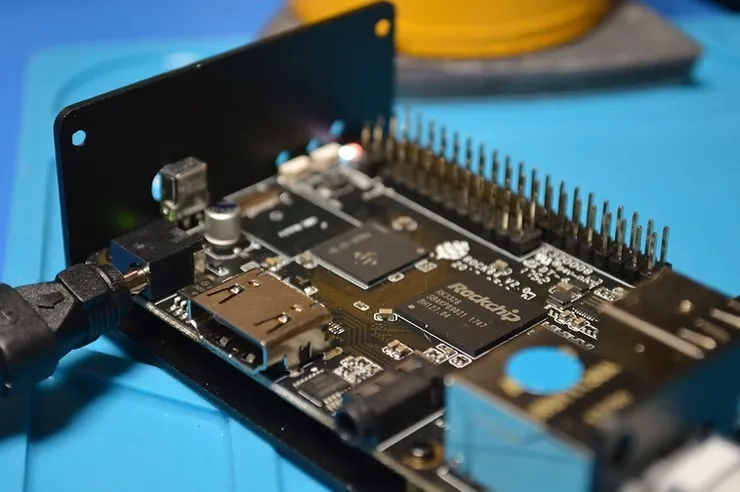
WebRTC has become a cornerstone for real-time communication in web applications, enabling seamless audio, video, and data streaming directly in the browser. However, when it comes to IoT and embedded devices, leveraging WebRTC in a browser may not be the most efficient option. This is where compiling LibWebRTC natively for ARM devices comes into play. By doing so, developers can create highly optimized applications that significantly reduce CPU usage, resulting in lower power consumption and improved performance—key factors for IoT and embedded systems.
When you compile LibWebRTC for ARM, especially in the context of IoT and embedded devices, you unlock the potential to run real-time communication applications natively on ARM processors. This approach offers several advantages over using WebRTC within a browser, such as reduced latency, better resource management, and enhanced performance. The result is a more stable and reliable communication experience, which is crucial for applications in resource-constrained environments like smart homes, industrial IoT, and other embedded systems.
WebRTC for Embedded: Steps to Compile LibWebRTC for ARM
Compiling LibWebRTC for ARM, particularly for IoT and embedded devices, requires a few detailed steps. The following guide will help you through the process:
1. Set Up the Build Environment
Start by preparing an Ubuntu environment, either directly on an ARM device or on an x86 machine if you plan to cross-compile for ARM. Ensure that all necessary dependencies, such as Python, Git, and the build-essential package, are installed.
sudo apt-get update
sudo apt-get install build-essential python git
2. Fetch the LibWebRTC Source Code
Clone the depot tools repository, which is essential for managing the source code of LibWebRTC.
git clone https://chromium.googlesource.com/chromium/tools/depot_tools.git
export PATH="$PATH:/path_to_depot_tools"
Fetch the LibWebRTC source code using the following commands:
fetch --nohooks webrtc
cd src
gclient sync
3. Explore Available GN Build Options
Before generating the GN build files, it’s beneficial to review all available build options. This step ensures that you configure your build optimally for your IoT or embedded ARM device.
gn args out/Default --list
This command lists all configurable GN build options, allowing you to tailor the build process to your specific needs.
4. Set Up GN Configuration
Generate GN build files tailored to the target architecture, either ARM32 or ARM64.
For ARM32:
gn gen out/arm32 --args='target_os="linux" target_cpu="arm" is_debug=false is_clang=true use_custom_libcxx=false'
For ARM64:
gn gen out/arm64 --args='target_os="linux" target_cpu="arm64" is_debug=false is_clang=true use_custom_libcxx=false'
Selecting the correct target_cpu (either arm for ARM32 or arm64 for ARM64) is crucial for optimizing the build for your IoT or embedded device.
5. Compile the Code
Once the GN configuration is set, you can proceed to compile the code using Ninja.
For ARM32:
ninja -C out/arm32
For ARM64:
ninja -C out/arm64
The compilation process may take some time, depending on your system’s hardware capabilities.
6. Deploy and Test
After successfully compiling LibWebRTC for ARM, deploy the binaries to your target IoT or embedded device. Comprehensive testing is essential to ensure that all functionalities are working correctly and that the performance benefits specific to your device are realized.
Note:
While compiling for ARM devices, one should use this option is_clang=truewhich is required to compile the neon flags available in the ARM architecture for video rendering acceleration. The default GCC in the Ubuntu-based Linux systems is not capable of compiling these flags and complains about neon flags. Therefore, it is advisable to use the clang already provided by the LibWebRTC to compile it rather than using the system’s default C++ compiler which is GCC.
Summary
Compiling LibWebRTC for ARM devices, particularly in the context of IoT and embedded systems, offers significant advantages over using browser-based WebRTC. Native compilation allows you to fine-tune applications to run efficiently on ARM processors, resulting in lower CPU usage, reduced power consumption, and enhanced performance. This is especially important for IoT and embedded devices where resources are limited, and efficiency is paramount.
For businesses operating in the IoT and embedded systems domain, optimizing WebRTC for ARM devices by compiling LibWebRTC natively opens up a world of possibilities. It enables the delivery of high-quality video calls, low-latency data streaming, and efficient resource usage—all critical factors for success in this field. Whether you’re developing applications for remote healthcare, smart home devices, or industrial automation, the ability to provide reliable, real-time communication on low-powered ARM CPUs is a game-changer that can drive innovation and efficiency in your solutions.
We recently built a C++ video application for ARM devices (both 32-bit and 64-bit) to work with our existing cloud video infrastructure. From our recent experience, we can say that it’s not an easy task and needs significant effort to compile & build a native C++ video application. If you also have an IOT / Embedded video conferencing/streaming use case and don’t know where to start, do shout at hello@centedge.io. You also can schedule a video call with us to discuss your use case using our Meetnow page.
This technical article was first published here.

by admin | Nov 6, 2025 | Enterprise WebRTC, WebRTC
In today’s digital-first world, enterprises are increasingly looking to enhance their workflows with real-time video communication capabilities. Whether it’s for a cloud contact center, customer engagement, or internal collaboration, WebRTC (Web Real-Time Communication) has emerged as the backbone for building custom video calling, conferencing, and live streaming applications. However, building a production-ready, enterprise-grade custom real-Time audio/video solution using WebRTC is no small feat. It requires careful planning, technical expertise, and a clear understanding of business needs.
Here are the top five points enterprises should consider before embarking on the journey of building and integrating a custom WebRTC application:
1. Define Business Use Cases and User Experience Requirements
Before diving into development, it’s crucial to outline the specific business use cases and the user experience (UX) goals. Are you building a customer-facing video support solution, an internal collaboration tool, or a live streaming platform for events? Each use case has distinct requirements for latency, resolution, and feature sets such as screen sharing, recording, or chat integration. Additionally, consider:
- Target audience and their technical proficiency.
- Device compatibility (web, mobile, and native applications).
- Regulatory requirements, such as HIPAA for healthcare or GDPR for customer data privacy.
A well-defined scope not only ensures a smoother development process but also aligns the solution with your business goals.
2. Ensure Scalability and Reliability
For enterprise-grade applications, scalability and reliability are non-negotiable. Video calls with hundreds of participants or live streams with thousands of viewers demand robust infrastructure. When planning your architecture:
- Opt for distributed servers and load balancers to handle peak traffic.
- Implement mechanisms to recover from failures, such as session restoration.
- Ensure low-latency media streaming for real-time interaction if it is a critical requirement for your application with techniques like media server cascading.
WebRTC itself doesn’t offer a signaling protocol—you’ll need to design or integrate one to manage session initiation, participant connection, and message exchange. Using standards like WebSocket or MQTT can provide the required reliability for signaling.
3. Optimize for Network Conditions and Bandwidth Management
Unstable network conditions can severely degrade the user experience in a real-time application. Enterprises should prioritize:
- Adaptive bitrate streaming to dynamically adjust video quality based on network bandwidth.
- Packet loss recovery techniques such as forward error correction (FEC).
- Configuring TURN (Traversal Using Relays around NAT) and STUN (Session Traversal Utilities for NAT) servers to ensure seamless peer-to-peer connections, even behind firewalls.
Testing the application across various network scenarios, including low bandwidth and high latency, is essential to delivering a consistent experience.
4. Incorporate Advanced Security Features
Security is a critical concern for enterprises, especially in industries like healthcare, finance, and government. WebRTC encrypts media streams by default using DTLS-SRTP, but additional measures should be considered:
- Implementing end-to-end encryption for sensitive communications.
- Using secure signaling channels (e.g., HTTPS and WSS).
- Regular security audits and compliance with standards such as ISO 27001.
Additionally, access control mechanisms, like token-based authentication, can prevent unauthorized use and ensure that only authenticated users can access the system.
5. Plan for Long-Term Maintenance and Updates
Building a custom WebRTC solution is not a one-time investment. As technologies and user needs evolve, so must your application. Enterprises should:
- Set up continuous monitoring and analytics to track performance and usage.
- Regularly update the application to address security vulnerabilities and incorporate new WebRTC standards.
- Invest in skilled developers who understand the nuances of WebRTC and its ecosystem.
Moreover, ensure your solution can integrate with other enterprise systems, such as CRM, ERP, or cloud contact center platforms, to provide a seamless workflow.
Alternatives to Building a Enterprise-Grade Custom Real-Time Audio/Video Solutions
While building a custom WebRTC application offers complete control and customization, it can be resource-intensive and time-consuming. For enterprises that want to fast-track implementation or lack in-house expertise, leveraging commercially available programmable video SDK solutions is a viable alternative. Vendors like Samvyo.com provide enterprise-grade APIs and SDKs that enable businesses to integrate video conferencing, live streaming, and real-time communication into their workflows without starting from scratch.
These solutions come pre-built with essential features like:
- Scalable infrastructure to handle high traffic.
- Pre-configured security and compliance mechanisms.
- Advanced analytics and monitoring tools.
Using a programmable video SDK not only reduces development time but also ensures a production-ready, reliable solution that can be tailored to your specific business needs. By partnering with trusted providers, enterprises can focus on delivering value to their users rather than managing the complexities of WebRTC development.
Final Thoughts
Enterprises looking to integrate real-time video communication into their workflows have a strategic decision to make: build a custom solution or leverage a programmable video SDK. While custom development offers unparalleled flexibility, it demands significant investment in time, resources, and expertise. On the other hand, commercially available SDKs from providers like Samvyo.com offer a faster and more cost-effective path to integration, enabling enterprises to stay agile in a competitive market.
Ultimately, the choice depends on your organization’s priorities, resources, and long-term vision. Whether you opt for a custom-built WebRTC application or a ready-to-use SDK, the key is to align the solution with your business objectives and deliver a seamless, secure, and scalable user experience.
If you are an Enterprise looking for professional help for your planning process before venturing out to building Enterprise-Grade Custom Real-Time Audio/Video solutions for integrating to some of your critical business workflows, feel free to drop us an email at hello@centedge.io for a free 30mins strategic discussion session for diving deep into your requirement to provide you with the correct ingredients required to realize your requirement without time and cost overruns. You can reach out to us using this link as well.

by admin | Nov 6, 2025 | Embedded, Enterprise WebRTC, IOT, LibWebRTC, WebRTC
Introduction
As urbanization drives the construction of high-rise buildings, elevators have become an essential component of modern infrastructure. With millions relying on these systems daily, ensuring passenger safety has never been more critical. This white paper explores the evolution of safety elevators, current market dynamics, and how WebRTC technology can redefine safety standards by enabling real-time two-way video communication.
A Brief History of Safety Elevators
The invention of the safety elevator revolutionized urban architecture, enabling skyscrapers and high-rise buildings. Elisha Otis introduced the first safety elevator in 1852, a system that incorporated a fail-safe brake mechanism to prevent the elevator from plummeting in case of rope failure. Since then, elevators have become indispensable, evolving from simple manual controls to advanced automated systems equipped with state-of-the-art safety features.
The Growing Importance of Safety Elevators
With the rapid urbanization of cities worldwide, safety elevators have seen exponential growth. According to market reports, the global elevator market is expected to reach $135 billion by 2030, driven by increased high-rise construction and stricter safety regulations. As cities grow vertically, ensuring the safety of elevator passengers during emergencies has become a paramount concern for manufacturers and regulators alike.
Rethinking Elevator Safety: The Role of Two-Way Video Calling Systems
While traditional safety systems like alarms and emergency stop buttons have been effective, they often fall short in addressing real-time emergencies, such as medical crises or mechanical failures. Two-way video calling systems offer a transformative solution, enabling real-time communication between passengers and emergency response teams. This technology can bridge critical gaps in emergency response, providing instant visual and auditory information that aids faster and more effective rescue planning.
Current Emergency Response Technologies in Elevators
Most modern elevators are equipped with:
- Emergency intercoms for audio communication.
- Alarm buttons to alert building security.
- Automatic emergency braking systems for mechanical safety.
However, these legacy systems often lack the real-time visual context required for effective decision-making during complex emergencies.
WebRTC: Enhancing Safety with Real-Time Video Communication
WebRTC (Web Real-Time Communication) introduces a paradigm shift by enabling high-quality, low-latency video and audio communication directly between elevator occupants and rescue teams. Its benefits include:
- Improved situational awareness through live video feeds.
- Faster response times as rescue teams receive real-time updates.
- Enhanced passenger confidence during emergencies.
Unlike traditional systems, WebRTC-based solutions operate efficiently without relying on centralized servers, ensuring robust performance even in challenging network conditions.
Challenges in Hardware Integration
Integrating a WebRTC-based video calling system into elevator hardware poses unique challenges:
- Limited CPU Power: Elevator control units typically run minimalistic Linux-based operating systems with low processing capabilities.
- Absence of Browsers: Many systems lack browser environments necessary for running WebRTC applications.
- Hardware Constraints: Limited support for video and audio processing, leading to potential performance bottlenecks.
Building a Native WebRTC Solution for hardware integrations
To overcome these challenges, Videoedge developed a highly optimized solution:
- Native libWebRTC Build: Custom-compiled WebRTC libraries for target hardware.
- C++ Application: Designed to leverage RTC peer connection objects for establishing calls.
- Media Capture: Implemented browser-equivalent getUserMedia functionalities for camera and microphone access.
- Rendering Layer: Utilized GStreamer and libgtk for efficient video/audio rendering.
- Hardware Acceleration: Exploited available GPU resources to offload processing tasks, minimizing CPU load.
- Multithreading: Distributed tasks across multiple threads to avoid bottlenecks and ensure smooth video and audio streams.
Beyond Elevators: Broader Industrial Applications
The same WebRTC-based capabilities can revolutionize workflows in:
- Industry 4.0: Real-time video monitoring of manufacturing processes.
- Advanced Automotive Use Cases: Video telematics for driver assistance and remote diagnostics.
- Other Industrial Scenarios: Enhanced safety and communication in mines, oil rigs, and remote construction sites.
Case Study: Revolutionizing Emergency Response for a Global Elevator Manufacturer
Centedge recently partnered with one of the world’s largest elevator manufacturers to design a cutting-edge emergency response system. By adhering to the principles outlined above, we successfully delivered a WebRTC-based two-way video calling system that:
- Operates seamlessly on low-powered hardware, a dual-core 900Mhz NXP IMX6 processor: This processor is responsible for the entire operation of the Elevator unit including its core Linux-based OS and the entire application layer built on top of the OS layer for smooth elevator operation. The mandate provided to us was to keep the CPU usage < 70% while running a crystal clear audio/video call along with all other elevator processes running. We were able to achieve the mandate while keeping the CPU usage at 62% while running a 2-way WebRTC-powered video call along with all other elevator processes.
- Provides crystal-clear video and audio streams for real-time communication: The goal was to achieve the best possible audio/ video quality while trying to keep the CPU utilization below 70%. With a lot of experimentation, we found, that 320X240 at 10fps is the sweet spot that provides a clear 2-way audio/video while keeping the overall CPU utilization at 62%.
- Meets rigorous safety and compliance standards: Rigorous testing was done on the actual production hardware under various scenarios to find out issues and fix them proactively.
This solution significantly reduced response times and enhanced the overall safety of elevator passengers.
Elevator Safety with WebRTC: Conclusion
As the demands for safety and real-time communication continue to grow, Centedge’s unique and custom WebRTC-based solutions are setting new standards for emergency response systems. Whether it’s elevators, industrial workflows, or advanced automotive applications, our technology is designed to adapt and excel in diverse environments. If your organization is looking to enhance safety and operational efficiency, let Centedge tailor a solution that meets your unique requirements.
If you are an Enterprise looking to build Enterprise-Grade Custom Real-Time Audio/Video solutions with hardware integrations for integrating into some of your critical business workflows, here is a link to the list of services we provide for Embedded/IOT integration use cases for WebRTC. Feel free to drop us an email at hello@centedge.io for a free 30mins strategic discussion session, if you feel a discussion with us would be an important starting point. This session would be exclusively for diving deep into your requirements to provide you with the correct ingredients required to realize your requirements without time and cost overruns. You can reach out to us using this link as well.
Feel free to take a look at the Videoedge Video API/SDK to speed up your development process without having to build the entire application from scratch. With Videoedge SDK, you get the entire backend ready to be deployed into multiple geographies across the world within a week’s time.
References:
Here is a blog we wrote some time ago on how to compile and build the native Libwebrtc for a target CPU type of ARM, responsible for enabling 2-way video calling natively on a hardware device without a dependency on browsers.

by admin | Nov 6, 2025 | Cloud Contact Center, CRM Integrations, Webinar Platform, WebRTC
In today’s fast-paced business world, customers expect more from brands than just products or services—they want personalized, seamless, and immediate support. The evolution of customer support systems, particularly cloud contact centers, has played a pivotal role in meeting these demands. As businesses shift from traditional telephony-based systems to cloud solutions, they are unlocking a new realm of possibilities for customer engagement and satisfaction. In this blog, we’ll explore the growing importance of cloud contact centers, their benefits, and how integrating advanced features like video calling, CRM systems, and webinars can take customer support to new heights.
What is a Cloud Contact Center and How It Differs from Legacy Telephony-Based Contact Centers?
A cloud contact center is a virtual call center hosted on the internet rather than relying on physical hardware or traditional telephony infrastructure. This solution leverages cloud computing technology to route calls, manage interactions, and provide support without the need for complex on-site setups.
The key difference between cloud-based and legacy telephony contact centers lies in the underlying technology. Traditional telephony contact centers rely heavily on dedicated hardware, such as PBX (Private Branch Exchange) systems, and are often tied to a fixed office location. This limits scalability, flexibility, and the ability to adapt to new communication channels.
Cloud contact centers, on the other hand, operate in a virtual environment, enabling agents to work from anywhere. They support multiple communication channels—voice, chat, email, and social media—integrating seamlessly with a brand’s CRM and offering advanced analytics. This flexibility allows businesses to scale up or down quickly based on demand, and at a fraction of the cost of traditional systems.
Benefits of a Cloud Contact Center without IVR Over a Legacy Telephony/IVR-Based System
The shift from legacy telephony systems to cloud contact centers provides organizations with an array of benefits that directly impact both operational efficiency and customer satisfaction. Here’s a deeper look into the advantages of cloud contact centers:
- Scalability and Flexibility: Cloud contact centers are inherently scalable, enabling businesses to quickly expand or contract based on demand. Unlike traditional telephony systems, which often require complex upgrades and additional hardware, cloud solutions allow businesses to add new agents or services seamlessly. This scalability is crucial for handling seasonal surges in customer interactions or business growth.
- Cost Efficiency: Cloud solutions significantly reduce the costs associated with maintaining physical infrastructure, such as servers and on-premise PBX systems. Businesses can leverage subscription-based pricing models, which are cost-effective and eliminate upfront hardware investment. This financial flexibility allows companies to allocate resources toward customer experience enhancements and other strategic initiatives.
- Advanced Features and Integration: Cloud contact centers support advanced functionalities such as omnichannel communication, real-time analytics, and AI-powered automation, which are difficult or costly to implement in legacy systems. Features like predictive routing, speech recognition, and chatbots enable businesses to handle customer interactions with greater accuracy and efficiency, improving the overall customer experience.
- Enhanced Security: Cloud providers offer robust security protocols, including encryption, multi-factor authentication, and compliance with industry regulations (e.g., GDPR, HIPAA). These features ensure that customer data is protected with the highest standards, which can be a significant challenge for traditional telephony systems that often lack such integrated security measures.
Running Cloud Contact Centers with IVR Numbers/Systems: Emerging Challenges
While IVR (Interactive Voice Response) systems have been a cornerstone of traditional contact centers, their integration into cloud-based platforms introduces a set of challenges that can hinder the customer experience. These issues are becoming more apparent as customer expectations evolve:
- Customer Frustration: The complexity and impersonal nature of traditional IVR systems can leave customers frustrated. Navigating through long menus or encountering dead-ends often leads to negative experiences. Customers increasingly prefer to bypass these barriers with direct access to agents or support teams who can offer personalized assistance.
- Lack of Contextual Awareness: IVR systems typically rely on pre-programmed decision trees that can’t adapt to real-time customer contexts. When a customer calls in with a specific issue or query, IVRs often fail to understand the nuances of the problem, which results in a less efficient service and can lead to unnecessary transfers to human agents.
- Inefficiency in Complex Queries: IVRs are great for simple, routine tasks (e.g., checking account balances or tracking orders), but they become ineffective when customers face complex issues that require more nuanced support. In these cases, IVR-driven contact centers often see longer resolution times and increased customer dissatisfaction.
- Missed Opportunities for Personalization: With IVRs, customers are often treated like case numbers, rather than individuals. A lack of personalization in these systems means that brands miss the opportunity to engage customers in meaningful ways, leaving them feeling less valued.
Browser/Mobile App-Based Calling: A New Era of Customer Experience
The integration of browser and mobile app-based calling solutions is fundamentally transforming customer interactions in cloud contact centers. This shift not only removes the dependency on traditional telephony systems but also empowers businesses to offer more efficient, seamless, and engaging experiences:
- No Need for Dedicated Hardware: With browser and mobile app-based calling, businesses eliminate the need for expensive and bulky telephony hardware. Customers can initiate calls directly from a website or app with just a click, which simplifies the process and improves accessibility.
- Real-Time Assistance: These systems allow for faster, more fluid customer interactions. With integrated chat, voice, and video, agents can resolve issues more effectively and offer real-time assistance, leading to faster issue resolution and fewer follow-ups.
- Enhanced Engagement and Interactivity: Browser and app-based calls enable additional features like screen sharing, file transfers, and chat functionality. These interactive elements help agents better understand customer issues and provide more personalized solutions. For instance, a customer experiencing an issue with a product can show it to the agent via video, allowing for quicker troubleshooting.
- Increased Convenience for Customers: Customers can reach support teams instantly from their mobile devices or browsers without needing to make a phone call. This convenience ensures customers can connect with agents when they need help most, which directly impacts satisfaction levels and fosters loyalty.
The Power of Website and Mobile App-Based Calling for Customer Support
Website and mobile app-based calling solutions are redefining how businesses approach customer support. These integrated solutions offer numerous advantages in terms of security, ease of integration, customer experience, and operational efficiency:
- Security and Data Protection: Web and app-based calling systems utilize secure connections that protect customer data during interactions. With encryption protocols in place, businesses ensure that sensitive information remains private, which is especially important for industries dealing with financial or personal data.
- Seamless Integration with CRM Systems: These solutions integrate effortlessly with existing CRM platforms, enabling support agents to access comprehensive customer profiles during each interaction. This integration helps businesses provide contextually aware support, speeding up resolution times and ensuring that customers don’t have to repeat themselves.
- Ease of Use and Convenience: One-click calling functionality simplifies the process for customers, eliminating the need for dialing phone numbers or navigating through IVR menus. Whether via a website or mobile app, the process is intuitive, which enhances the overall customer experience and reduces friction during interactions.
- Better Customer Experience and Satisfaction: Providing customers with direct, instant access to support, without the hassle of navigating multiple touchpoints, fosters positive interactions. As customers can reach out to support teams through their preferred communication method, whether on desktop or mobile, their satisfaction is higher, leading to improved CSAT scores.
The Role of Video Calling in Cloud Contact Centers
Incorporating video calling into a cloud contact center is rapidly becoming an essential capability, enabling businesses to provide more dynamic and engaging customer support. Video calling creates a richer, more personalized interaction compared to traditional voice calls:
- Enhanced Personalization: Video calling brings a human element to remote interactions. By seeing the customer’s face and body language, agents can respond more empathetically and tailor their communication to the individual’s needs, building stronger relationships and trust.
- Visual Problem-Solving: Video calls are especially valuable in industries where visual guidance is essential, such as in technical support, medical consultations, or product troubleshooting. Customers can demonstrate the problem, and agents can walk them through the resolution process visually, reducing confusion and ensuring faster solutions.
- Increased CSAT Scores: Offering the option to switch from voice to video calls improves the customer experience by adding an extra layer of interaction. For example, an e-commerce brand can have a video call to demonstrate a product’s features in real-time, improving the likelihood of a purchase and increasing customer satisfaction.
- Real-World Use Cases: For example, in the healthcare industry, video calls can facilitate virtual consultations, reducing wait times and providing patients with a more accessible and convenient way to receive care. Similarly, in the automotive sector, video consultations can allow dealerships to give virtual car tours, enhancing the buying experience and driving customer loyalty.
Enhancing Cloud Contact Centers with Interactive Webinars
Integrating interactive webinars into cloud contact centers is an effective way to handle large volumes of customer queries, particularly for businesses offering specialized products or services. Webinars not only provide customers with self-service options but also allow businesses to scale their support capabilities:
- Scalability and Efficiency: Automated webinars are a scalable solution for managing a high volume of customer inquiries. By hosting webinars on specific topics, businesses can address common questions or provide in-depth product knowledge to large audiences simultaneously, saving time and reducing the need for individual calls.
- Consistent Messaging: Webinars ensure that all customers receive the same information, eliminating inconsistencies in the support provided by different agents. This consistency enhances customer confidence in the brand’s messaging and ensures that everyone is on the same page.
- Enhanced CSAT: Customers benefit from the convenience of accessing information whenever they need it. If a customer is unable to attend a live webinar, they can often view a recording on-demand. This flexibility reduces wait times and enhances the overall customer experience, contributing to higher satisfaction scores.
- Reduced Support Costs: By addressing frequent queries through webinars, businesses can free up agents to focus on more complex issues. This improves the efficiency of the contact center and reduces operational costs, while also ensuring that customers still have access to important information when needed.
The Impact of CRM Integration on Cloud Contact Centers
Integrating a CRM system with a cloud contact center significantly enhances the ability to deliver seamless, personalized customer service. This integration allows businesses to centralize customer data and ensures that every customer interaction is informed by the most up-to-date information available. By providing agents with a comprehensive view of a customer’s history, preferences, and previous interactions, CRM systems help reduce response times and improve the accuracy of support.
Moreover, CRM integration streamlines ticketing and query resolution processes, allowing for automated updates and reminders. This eliminates the risk of lost queries or delayed responses, creating a more organized and efficient customer service workflow. Agents can resolve issues faster and with more context, leading to higher first-call resolution rates. The ability to track and manage customer journeys from inquiry to resolution improves the overall operational efficiency of the contact center while also ensuring that customers receive tailored, high-quality service that enhances their overall experience.
By seamlessly connecting customer interaction data with ticketing and query resolution systems, businesses can offer superior service:
- Improved Case Management: Cloud contact centers with CRM integration streamline ticketing processes, ensuring that no query goes unresolved and providing agents with all the necessary information to address issues efficiently.
- Personalized Support: With access to comprehensive customer data, agents can provide tailored solutions based on previous interactions, increasing the chances of first-call resolution.
Transforming Customer Touchpoints Across Industries
Cloud contact centers are not just a tool for solving problems; they are catalysts for transforming customer touchpoints across diverse industries like BFSI (Banking, Financial Services, and Insurance), automotive, e-commerce, and more. Each industry has unique needs and challenges when it comes to customer interactions, and a cloud-based approach enables brands to deliver a highly personalized, consistent, and efficient experience.
For example, in the BFSI sector, clients often require sensitive financial information or advice, and the ability to move from voice calls to video consultations can foster trust and improve communication during critical moments. Similarly, in the automotive industry, a cloud contact center with integrated video calling can enable customers to have live, real-time demonstrations of car features, which can drive customer satisfaction and accelerate purchasing decisions. E-commerce businesses can leverage cloud contact centers to handle inquiries and provide post-purchase support, using omnichannel capabilities to engage with customers through their preferred communication methods, whether it’s chat, email, or video.
What truly sets a cloud contact center apart is its flexibility and scalability. Regardless of the industry, it enables brands to seamlessly connect with customers across multiple touchpoints, ensuring that interactions are handled in the most efficient and effective way possible. This capability not only leads to faster resolutions but also improves brand loyalty, as customers feel heard and valued across all touchpoints.
Shifting the Paradigm: Cloud Contact Centers as a Profit Center
The traditional view of contact centers as a cost center is quickly becoming obsolete. In today’s customer-centric world, cloud contact centers are emerging as essential profit centers. They directly contribute to a brand’s bottom line by improving customer retention, driving referrals, and increasing overall customer lifetime value. Rather than seeing customer service as an expense, businesses should recognize it as an investment in customer satisfaction and loyalty.
A cloud contact center’s ability to handle customer inquiries quickly and efficiently results in a higher level of service and, ultimately, higher satisfaction scores. Satisfied customers are more likely to become repeat buyers, brand advocates, and vocal referrers to friends and family. This creates a ripple effect that positively impacts sales, enhances reputation, and contributes to long-term profitability. Moreover, the seamless integration of video calls, CRM data, and automated features increases customer engagement and ensures that interactions are not only resolved but also deepen the connection with the brand.
When businesses view cloud contact centers as a profit-generating asset, they can shift their focus from mere problem-solving to relationship-building. The long-term benefits of this strategic approach far outweigh the initial investment in technology. By fostering strong customer relationships, cloud contact centers help businesses secure a competitive edge in today’s ever-evolving market landscape.
Centedge’s Cutting-Edge Cloud Contact Center Solution
Centedge’s cloud contact center without IVR as a solution is a game-changer for businesses looking to elevate their customer service operations. With a focus on flexibility, scalability, and seamless user experiences, Centedge empowers brands to transform their entire customer engagement strategy. The platform integrates seamlessly with both browser and mobile app-based calling, enabling customers to reach support teams instantly without the need for traditional telephony setups. This modern approach not only simplifies communication but also makes it more accessible, as customers can connect with agents directly from their devices—whether through a website or a mobile app.
One of the standout features of Centedge’s solution is its ability to effortlessly switch from voice calls to video calls at the click of a button. This on-demand video calling capability is invaluable, particularly in scenarios where visual context enhances communication. Whether it’s a technical issue requiring a demonstration, a product inquiry needing a closer look, or a sensitive conversation that benefits from a personal touch, the ability to transition from voice to video in real-time significantly improves customer satisfaction.
Beyond the core calling functionality, Centedge’s cloud contact center also integrates with powerful CRM systems, ensuring that agents have access to comprehensive customer profiles. This data-driven approach enables personalized interactions, quicker resolutions, and a more efficient support process. Additionally, Centedge’s platform incorporates automated webinar solutions, allowing businesses to manage high volumes of customer queries efficiently and consistently, particularly on specific topics or during peak times. These webinars provide customers with valuable information and answers to frequently asked questions, reducing wait times and improving overall service levels.
For businesses aiming to deliver superior customer experiences, Centedge’s cloud contact center offers a holistic, integrated approach that combines the best of video calling, CRM data, and scalable solutions. By transforming all touchpoints—whether pre-sales, sales, support, or service—into seamless, meaningful interactions, Centedge helps brands build stronger customer relationships, enhance loyalty, and ultimately drive growth. This cutting-edge solution is not just about solving problems but creating memorable experiences that set brands apart in a competitive market.
Feel free to drop us an email at hello@centedge.io to initiate a conversation with us. You also can use this link to request a meeting or have an instant meeting with us at our available timings. Here is our customer success framework that we follow while working with our customers for a win-win outcome for all our customer engagements. We are eager to hear from you.
